01
Keep sun-facing rooms cooler and more comfortable
Solar control film reduces the solar heat that passes through your glass, so west- and south-facing rooms stay usable in the afternoon — without closing every blind.

Window film solutions
We recommend film by the result you're after — cooler rooms, less glare, privacy, UV protection or a better-looking building — then match it to your glass.
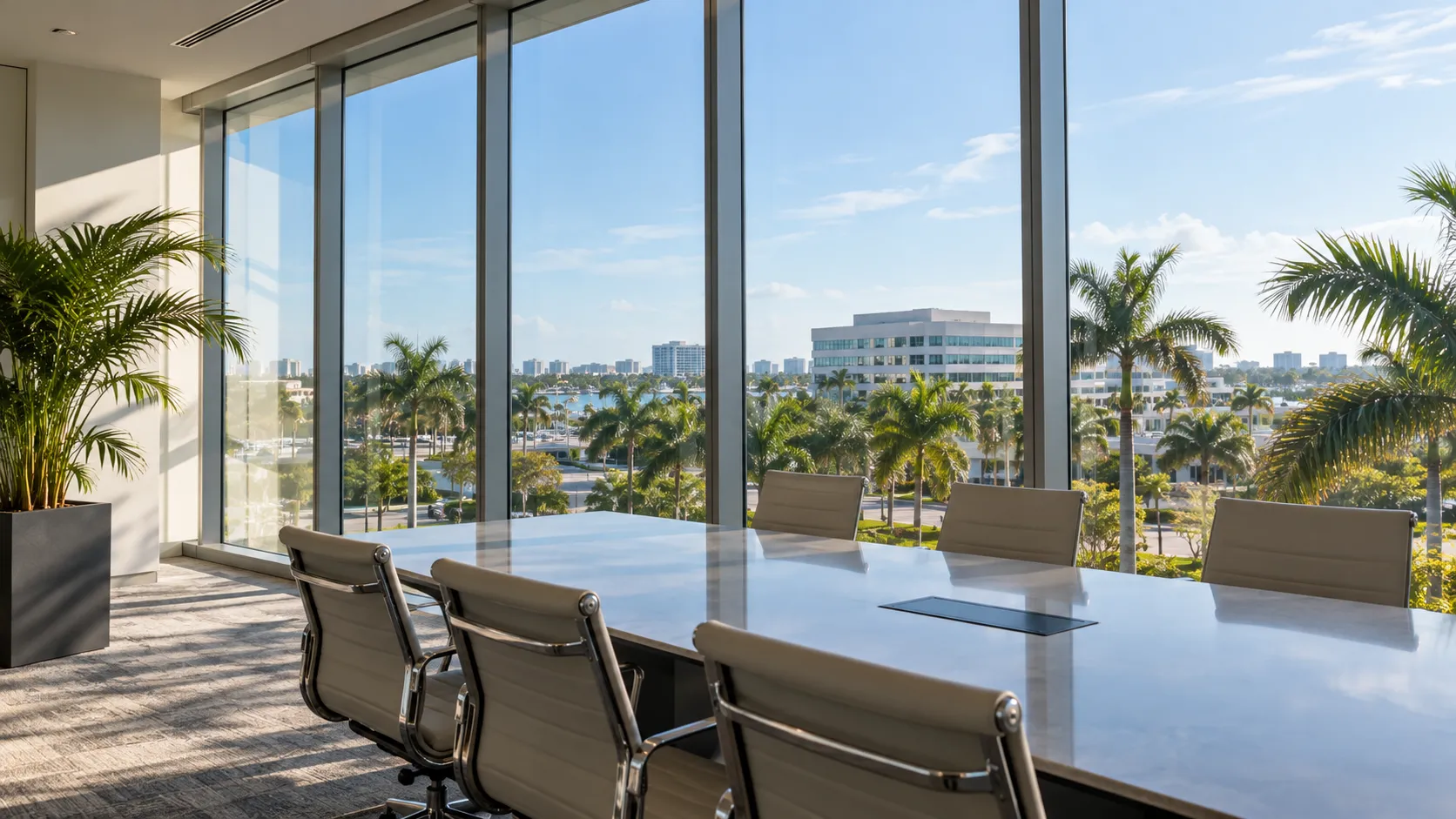
Illustrative image
Short answer
Architectural window film is a thin, professionally installed film applied to existing glass to reduce solar heat, glare and UV, add daytime privacy or change the building's appearance. Different film types do different jobs: spectrally selective and neutral films keep a natural look, tinted films focus on glare, and reflective films deliver the most heat rejection and privacy. The best choice depends on your goal, your glass and its sun exposure.
Start with the goal
Solar control film reduces the solar heat that passes through your glass, so west- and south-facing rooms stay usable in the afternoon — without closing every blind.
Bright, low sun and light reflected off water, pools and pavers make screens hard to see and rooms hard to sit in. The right film turns the brightness down without turning the room off.
For homes and buildings where the view is the point, spectrally selective films target the invisible part of sunlight that carries heat, while letting most of the visible light through.
Reflective and dual-reflective films make it harder to see in during the day while you still see out — and they bring strong heat and glare control with them.
Florida sun fades hardwood, rugs, upholstery, cabinetry and artwork. Window film blocks most of the ultraviolet coming through the glass — even clear-looking films.
Film can unify a mismatched façade, modernize dated glass and reduce the heat and glare complaints that come from the desks nearest the windows.
Some glass shouldn't have film on the inside. Exterior-applied films stop solar energy before it enters the glass and are made specifically for outdoor exposure.
Film types, explained
A plain comparison of how the main film families look and behave. Specific products and shades vary.
| Film type | Appearance | Best at | Trade-off |
|---|---|---|---|
| Spectrally selectiveTargets infrared heat while keeping visible light high — the 'barely there' option. | Very light, low reflection | Heat reduction while keeping the view | Less total heat rejection and little glare or privacy |
| Ceramic / nano-ceramic | Light to medium, low reflection | Infrared heat rejection without a metallic look | Usually a premium price; performance varies by shade |
| Neutral & light solarLow-colour, low-reflection appearance that doesn't change the look of the glass much. | Natural, low colour cast | Balanced heat, glare and UV control | Moderate heat rejection compared with reflective films |
| Tinted (grey / bronze)Grey or bronze tones that cut glare and heat with a warmer or cooler look. | Darker, coloured tone | Glare control and comfort | Reduces daylight; can look dark from inside |
| Dual-reflectiveMore reflective outside than inside, so night-time views out stay clearer. | Reflective outside, lower inside | Strong heat and glare control, clearer night view | Visible reflectivity from outside |
| Reflective (silver)Mirror-like exterior for maximum heat rejection and daytime privacy. | Mirrored exterior | Highest heat rejection and daytime privacy | Mirror effect inside at night; may be restricted by HOAs |
| Exterior-appliedApplied to the outside of the glass where interior film is not appropriate. | Usually reflective or tinted | Glass that shouldn't take interior film | Weather exposure; different warranty terms |
Glass first
Not every film belongs on every window. Insulated (dual-pane), low-E, laminated, tempered and very large panes each respond differently to the extra heat a film absorbs.
Before recommending anything, we identify the glass type, check the film manufacturer's film-to-glass compatibility guidance, and consider window size, shading and exposure. Where interior film isn't the right answer, we'll say so — and look at exterior film or a different film type instead.
Featured manufacturer
Madico is our featured architectural film manufacturer — a window film maker whose history goes back to 1903 and whose world headquarters is in Pinellas Park, here in Tampa Bay. Their solar control range covers light neutral, dual-reflective, reflective, tinted and exterior films.
Questions
Reflective films use a metallized layer to bounce sunlight away — they reject the most heat and give daytime privacy but look mirrored from outside. Neutral films aim for a natural, low-colour appearance with moderate heat and glare control. Ceramic films use ceramic particles to absorb infrared heat without a metallic look, and spectrally selective films are engineered to reject infrared while transmitting most visible light. The right one depends on whether heat, glare, privacy or appearance matters most.
The wrong film can. Film raises the temperature of the glass, and on some insulated, low-E, laminated or very large panes that increases the risk of thermal stress or seal problems. Film manufacturers publish film-to-glass compatibility guidance; we check it, along with glass type, size and exposure, before recommending a film. Exterior film or a lower-absorption film is sometimes the safer choice.
Interior architectural films are built for long service lives, and manufacturers back them with warranties whose terms vary by film, by residential or commercial use, and by interior or exterior application. Exterior films have shorter expected lives because they face the weather. We'll give you the manufacturer's specific warranty terms for your film in the estimate.
For architectural film, professional installation matters: glass assessment and compatibility checks, clean preparation, precise edges and correct handling of large panes are what make film look right and last. Manufacturer warranties also generally depend on proper installation.
Next step
Tell us what's bothering you about the glass — heat, glare, privacy, fading or appearance. We'll narrow it down by phone and assess on site when needed.
Free estimates by phone · on-site assessments when the glass needs to be seen.