Residential
Typical residential glare problems: TV walls opposite a slider, home offices facing the water, and kitchens with bright reflections off the pool deck.

Window film solution
Bright, low sun and light reflected off water, pools and pavers make screens hard to see and rooms hard to sit in. The right film turns the brightness down without turning the room off.
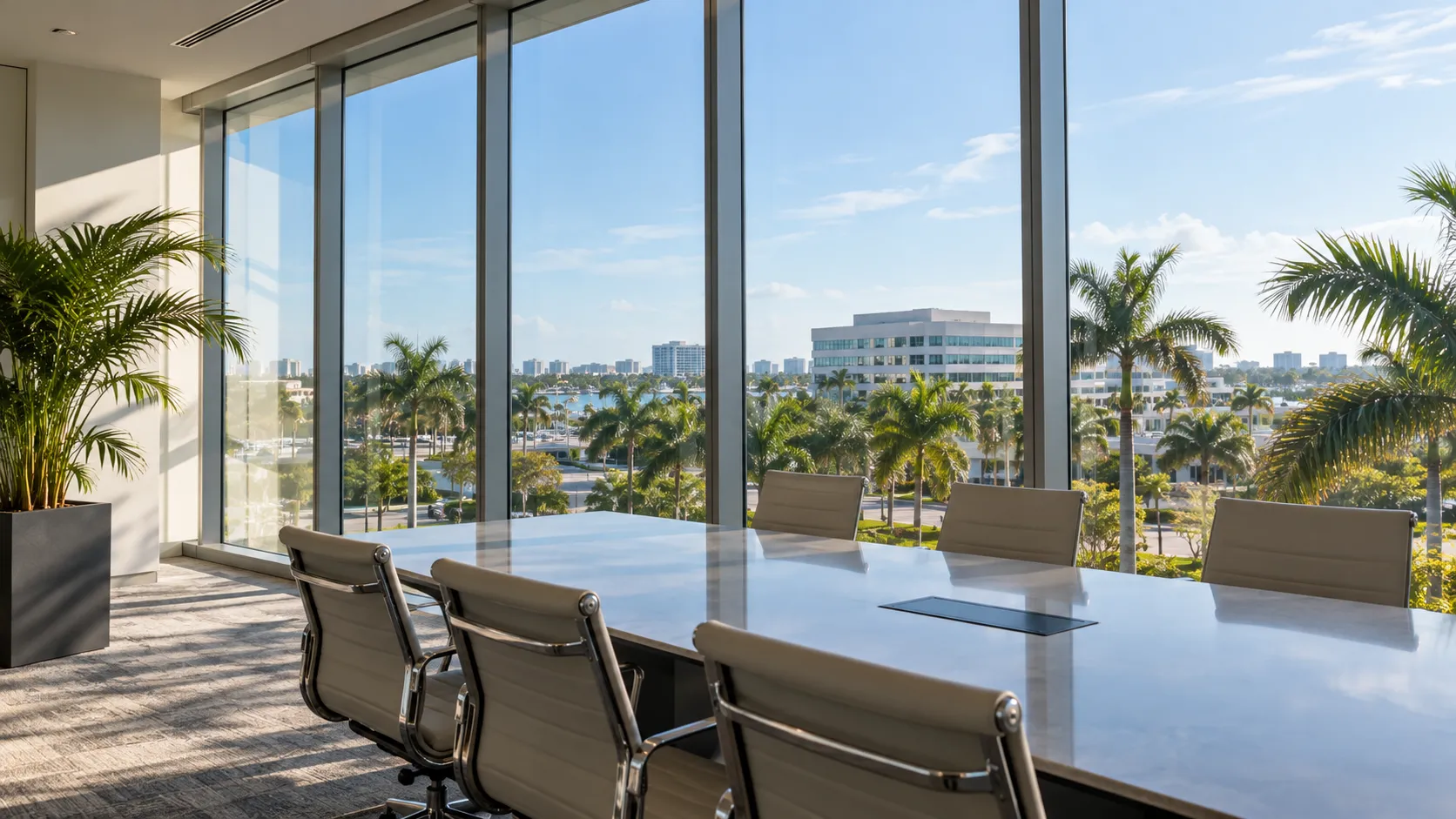
Illustrative image
Short answer
Window film reduces glare by lowering the amount of visible light passing through the glass. Lighter films take the edge off; medium tinted and dual-reflective films make a bigger difference on bright elevations. Manufacturers publish a 'glare reduction' value for each film, so we can match the level of glare control to how bright the room actually is — without going darker than you need.
Glare is a brightness problem, not just a heat problem. Low morning and late-afternoon sun, reflections off the Gulf, lakes and pools, and white concrete all push intense light through the glass.
It shows up as squinting at a TV or monitor, washed-out rooms, and blinds that stay closed all day.
Glare reduction tracks visible light transmission (VLT): the lower the VLT, the less light comes through and the greater the glare reduction. Tinted films (grey or bronze), dual-reflective films and dedicated anti-glare films are the usual tools.
Because each step down in VLT also changes how the room looks, we compare a few shades on your actual glass rather than picking from a chart.
For homes and businesses
Typical residential glare problems: TV walls opposite a slider, home offices facing the water, and kitchens with bright reflections off the pool deck.
In offices and retail, glare affects screens, staff comfort and how merchandise looks through the window. Glare control is often paired with heat control on the same elevation.
Film options
Recommendations are made after we've seen the glass. These are the product families that typically fit this goal.
Madico
Featured manufacturer
Strong heat and glare control with a clearer view out at night than standard reflective film.
The privacy end of the Optivision range — dark, reflective by day, with strong heat rejection.
A warm bronze tone that reduces heat and glare — often chosen to complement warmer architecture.
The exterior-applied version of Solar Bronze for glass that shouldn't take interior film.
A neutral grey tone in light-to-dark shades — a versatile glare and heat film for homes and offices.
Exterior-applied grey film for laminated, triple-pane or otherwise unsuitable glass.
Additional film lines
Global and Express window films
Dual-reflective film across a wide shade range, from light (45) to privacy-dark (05).
Sputtered neutral film in four shades — heat control with a restrained appearance.
A warm copper-bronze sputtered film for strong heat rejection with a bronze appearance.
An economical neutral film for heat and glare reduction without a strong colour cast.
A non-reflective anti-glare film for screens and bright rooms where heat is a secondary concern.
Product names are taken from manufacturer product pages. Performance figures vary by shade and glass; we'll provide the manufacturer's technical data for the specific film we recommend.
What we check first
Why H2O
Glass type, size, coatings and exposure are reviewed against the film maker's compatibility guidance before we recommend anything.
Our core architectural range comes from Madico, a window film manufacturer headquartered in Pinellas Park, here in Tampa Bay.
We work carefully around high-end interiors, custom window treatments and large or specialty glass.
You'll hear what a film will do, what it won't, and why we picked it — not just the most expensive option.
Most projects can be estimated by phone; we come out when the glass needs to be seen.
Questions
Yes. Lighter tinted and dual-reflective films reduce glare while keeping a clear view out. The view stays sharp; it simply looks less bright, similar to wearing sunglasses. The more glare reduction you want, the more the brightness of the view is reduced.
It depends on how bright the window is and how far the screen is from it. Medium-shade tinted or dual-reflective films usually make a noticeable difference. We'll suggest a range and show samples on the glass.
Next step
Send a few details about the rooms or elevations involved. We'll talk through options by phone and, if the glass needs to be seen, arrange an on-site assessment.
Free estimates by phone · on-site assessments when the glass needs to be seen.