Residential
Homeowners can use the same products for a uniform look across mixed windows, though we usually recommend lighter, lower-reflective options for homes.

Window film solution
Film can unify a mismatched façade, modernize dated glass and reduce the heat and glare complaints that come from the desks nearest the windows.
Illustrative image
Short answer
Commercial window film improves both how a building looks and how it feels inside. Reflective, dual-reflective and sputtered films give the exterior a consistent, modern appearance and reduce solar heat and glare at the perimeter, where occupant complaints are most common. It is installed on existing glass, usually with minimal disruption to the business.
Perimeter offices and storefronts take the full load of the sun. Staff move desks, close blinds and adjust thermostats, and the building's exterior can look patchy where some panes have been replaced or previously filmed.
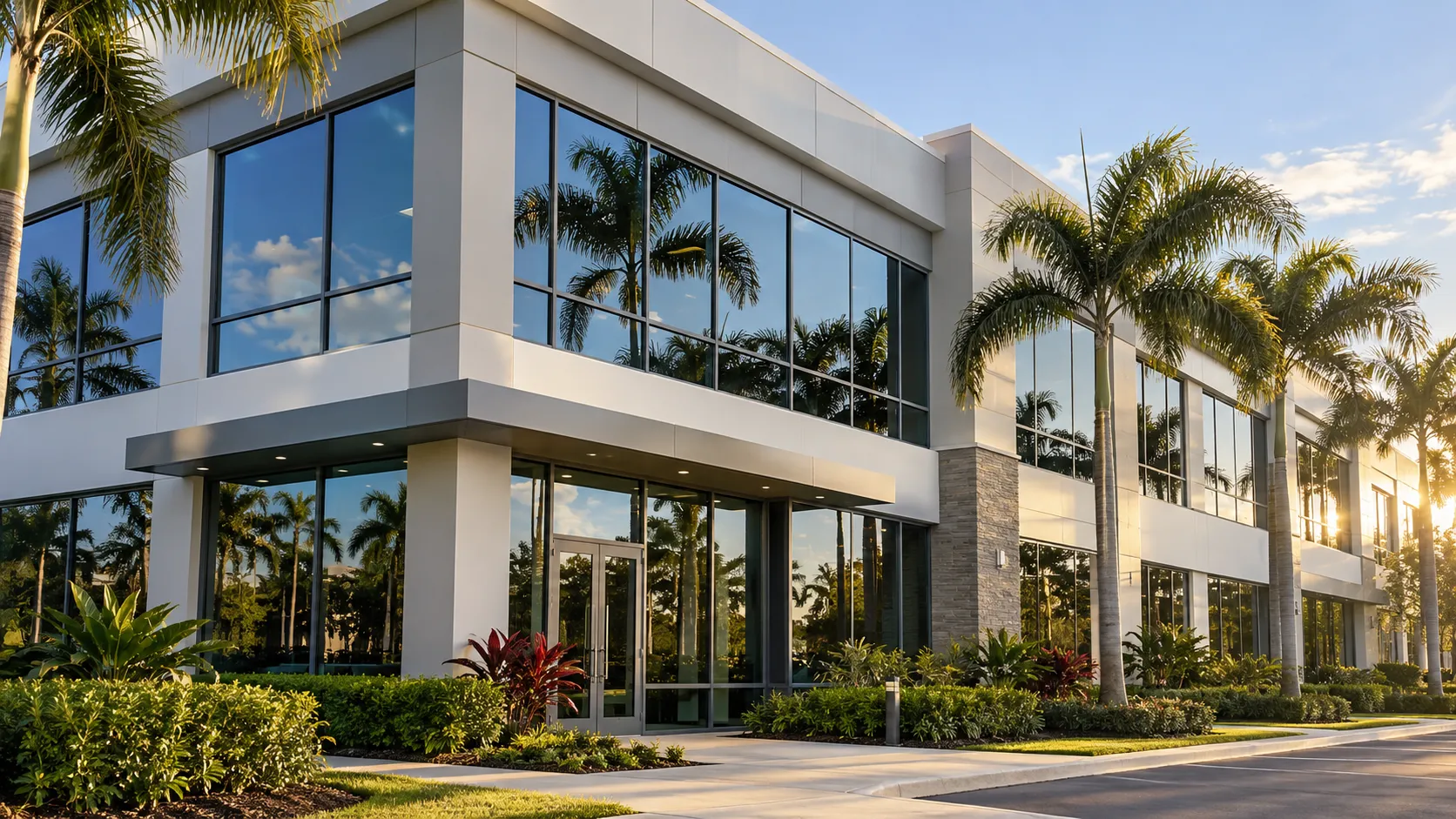
A consistent film across an elevation evens out the appearance of different glass types and gives a cleaner, more contemporary exterior. At the same time it reduces solar heat gain and glare at the glass.
We plan commercial work elevation by elevation and can phase installation around business hours.
For homes and businesses
Homeowners can use the same products for a uniform look across mixed windows, though we usually recommend lighter, lower-reflective options for homes.
Offices, medical buildings, retail centers, restaurants, hospitality properties and multi-building sites. We work with owners, property managers, builders and architects.
Film options
Recommendations are made after we've seen the glass. These are the product families that typically fit this goal.
Madico
Featured manufacturer
A light, neutral film for homes and buildings where a darker look isn't wanted.
Strong heat and glare control with a clearer view out at night than standard reflective film.
Classic silver reflective film for maximum solar control and daytime privacy.
Additional film lines
Global and Express window films
Sputtered neutral film in four shades — heat control with a restrained appearance.
Silver reflective film in four shades from light (68) to dark (15).
Coloured reflective films for commercial façades. ⚠ Listed as currently unavailable; single-pane only per listing.
Product names are taken from manufacturer product pages. Performance figures vary by shade and glass; we'll provide the manufacturer's technical data for the specific film we recommend.
What we check first
Why H2O
Glass type, size, coatings and exposure are reviewed against the film maker's compatibility guidance before we recommend anything.
Our core architectural range comes from Madico, a window film manufacturer headquartered in Pinellas Park, here in Tampa Bay.
Each façade is assessed on its own, with product data for owners, boards and architects.
You'll hear what a film will do, what it won't, and why we picked it — not just the most expensive option.
Most projects can be estimated by phone; we come out when the glass needs to be seen.
Questions
For buildings with a lot of sun-exposed glass, film is usually a low-disruption way to improve comfort, reduce glare and solar heat gain and refresh the exterior compared with replacing glass. Whether it pays back for your building depends on its glass, orientation, energy costs and goals, so we evaluate the building before quoting.
In most cases, yes. Interior film is installed from inside with limited disruption, and we can schedule work by area or after hours. We'll agree on a plan with you before starting.
Next step
Send a few details about the rooms or elevations involved. We'll talk through options by phone and, if the glass needs to be seen, arrange an on-site assessment.
Free estimates by phone · on-site assessments when the glass needs to be seen.